Toothache While Drinking Water
Imagine reaching for an ice-cold glass of water on a hot summer day… Just as you’re about to take a refreshing sip, you’re startled by a subtle yet piercing ache that suddenly appears in your tooth. Or, on a cold winter morning, you might drink warm water that warms your hand, yet you feel a tiny electric current running from your tooth to your brain. That uncomfortable feeling you experience at these very moments is the “toothache when drinking water,” a condition most of us overlook.
In fact, this ache often feels like a fleeting visitor; it arrives, hurts, and quickly disappears. But even those few seconds are enough to disrupt a person’s comfort. In the hustle and bustle of daily life, many people dismiss it, thinking “it’s nothing,” and don’t even admit it to themselves. However, the ache felt while drinking water is a much more significant signal than you might think. Because teeth don’t hurt out of the blue; these subtle symptoms often indicate a silent underlying problem, such as sensitivity, enamel weakness, inflammation, or other underlying condition.
So the body is essentially sending you a little warning: “Take care of me, something is wrong.”
Why Do Teeth Hurt When Drinking?
Toothache while drinking water is a symptom that many people experience without even realizing it, but can actually be considered a “cry for help” from their teeth. While it’s often associated with hot and cold sensitivity, pain even just from drinking water shouldn’t be taken lightly. This slight ache is often a sign that the protective layers on teeth are beginning to weaken.
I’m listing the most common causes we encounter in our clinic and among our patients.
Enamel Erosion – When Your Teeth’s Protective Shield Weakens
While tooth enamel is the hardest structure in our bodies, it’s not “invincible” as people think. Acidic drinks, improper brushing techniques, hard-bristled brushes, and even stress-induced clenching can cause enamel to thin over time.
Weakening enamel exposes the inner layer, called dentin. Dentin contains tiny tubules. When water comes into contact with these tubules, a pain signal is sent to the brain, which is precisely why you feel that brief but sharp pain.
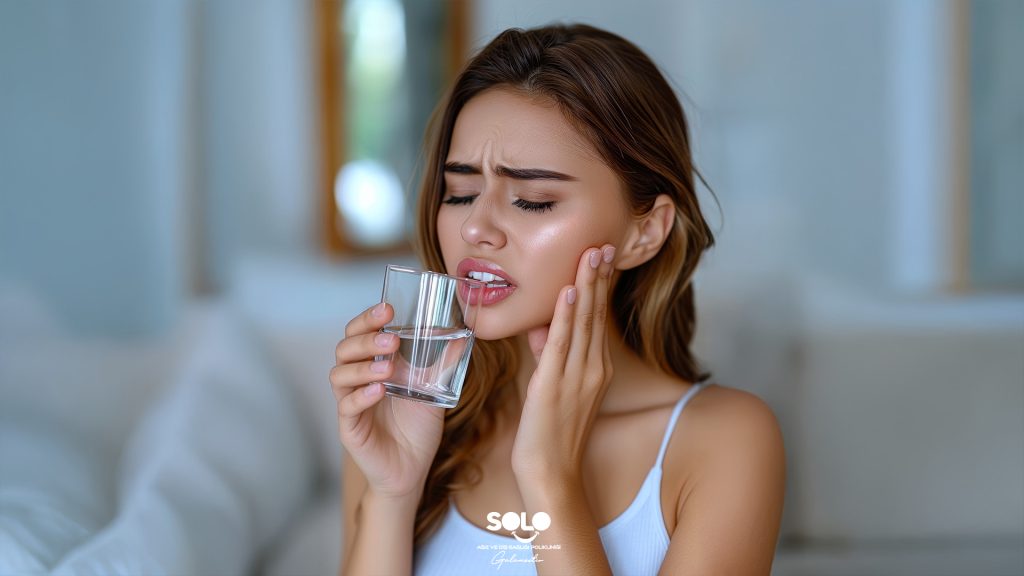
Cavities, the Silently Progressing Tiny Culprits
Even a tiny cavity can make its presence felt when it comes into contact with cold or hot water. Furthermore, because cavities often progress silently, a person may not even notice it. If a tooth hurts when drinking water, this can sometimes be the first small greeting a cavity is giving you.
Gum Recession – Exposed Root Surfaces
Gum recession is one of the most common causes of sensitivity because it exposes the dentin surface. The sudden pain felt around the root of the tooth, especially when drinking cold water, is often a typical symptom of receding gums.
- The main causes of receding gums are:
- Brushing too hard and improperly
- Corpuscular buildup
- Gum inflammation
- Age-related thinning of the gums
This condition does not resolve on its own and requires professional intervention. Early detection is crucial.
Temporary Sensitivity After Recent Treatments
It’s normal to experience a slight tingling sensation when drinking water after procedures like fillings, root canals, or crowns. The tooth is undergoing a recovery process. However, if this sensitivity persists for weeks, it’s essential to see your dentist again. This may indicate that the treatment needs to be reevaluated.
Clenching and Grinding Teeth
Unintentionally clenching or grinding your teeth while sleeping at night can cause enamel erosion over time. Even the slightest thinning of the enamel can cause tingling even when drinking a glass of water during the day. If you experience jaw pain, headaches, or tooth sensitivity when you wake up in the morning, bruxism is likely the underlying cause.
Frequent Consumption of Acidic and Sugary Foods
Sodas, energy drinks, lemonades, and frequent sugary foods all erode tooth enamel. When enamel weakens, even water ceases to be an innocent beverage and becomes a trigger for sensitivity.
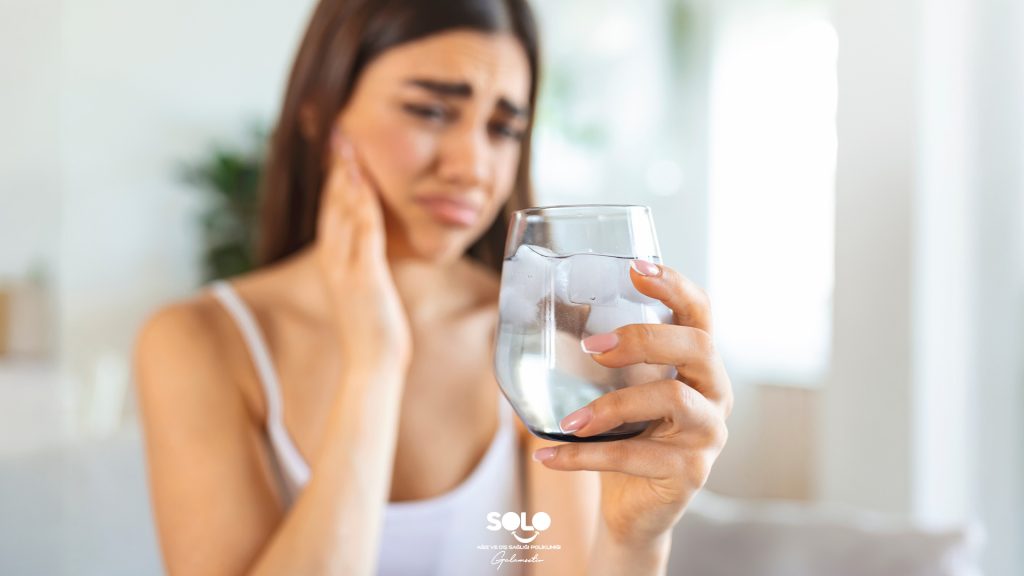
Toothache While Drinking Water Isn’t a Disease, It’s a Symptom
Toothache while drinking water isn’t actually a disease in itself, but rather a small warning your body sends. It’s the gentlest way to say, “Something’s wrong.” This pain can often be a sign of the beginning of a cavity, gum disease, thinning enamel, exposed dentin, or an early infection. So, while it might seem like a bad thing, it actually has an advantage, because it stops you in your tracks and tells you, “Let me take a look,” before significant pain occurs.
How to Get Rid of Toothache While Drinking Water
A dentist appointment is essential to completely resolve toothache while drinking water; however, some simple home remedies can also provide relief. When used regularly, desensitizing toothpastes can help seal the dentinal channels, providing significant improvement within a few weeks.
Avoiding hard-bristled brushes and brushing with a soft or medium-bristled brush, using gentle, circular motions, protects enamel. Reducing acidic and sugary foods, and especially limiting carbonated and lemon-lime drinks, can significantly alleviate sensitivity. If you have a habit of grinding your teeth at night, a dentist-prescribed nightguard can protect your enamel from wear and tear.
9 Valuable Tips to Prevent Toothache
- Brush your teeth morning and evening, gently, without pressing.
- Make flossing a habit every day by taking a few minutes.
- Reduce acidic, carbonated, and sugary drinks as much as possible.
- If you have a problem with nighttime teeth grinding, don’t put it off; be sure to get it treated.
- Schedule your dental health for checkups at least twice a year.
- If you regularly drink lemon water, reduce your intake to protect your tooth enamel.
- If you smoke, consider quitting to benefit your teeth and overall health.
- Never use your teeth for anything other than opening bottles or tearing packaging.
- Be gentle with your teeth by avoiding hard-bristled brushes and aggressive brushing.