

Apical Resection What Is It?
When most people experience a toothache, the first things that come to mind are fillings, root canal treatment, or unfortunately, tooth extraction. Especially if the pain has been going on for a long time, the thought “This tooth can’t be saved anymore” settles into the mind. However, not every toothache has to end with an extraction. In some cases, keeping the natural tooth in the mouth is not only possible but also much healthier in the long run. This is exactly where a treatment method that isn’t very well known but holds an important place in dentistry comes into play: apical resection.
Apical resection is a surgical procedure usually applied to teeth that have undergone root canal treatment but where the infection still does not heal. Its main goal is to solve the problem at its source without losing the tooth entirely. It may sound a bit intimidating; after all, the word “surgery” naturally causes concern for many people. However, when applied to the right patient at the right time, this method can eliminate pain and allow the tooth to remain healthy in the mouth for many years.
What Does Apical Resection Mean?
Apical resection, in the simplest and clearest terms, is the removal of the problematic part at the tip of the tooth root through a minor surgical procedure. The word “apical” refers to the root tip, while “resection” means removal. In this treatment, the target is not the entire tooth, but only the problematic root tip area that causes pain, inflammation, or infection. Healthy tissue is preserved, and only the troubled area is eliminated.
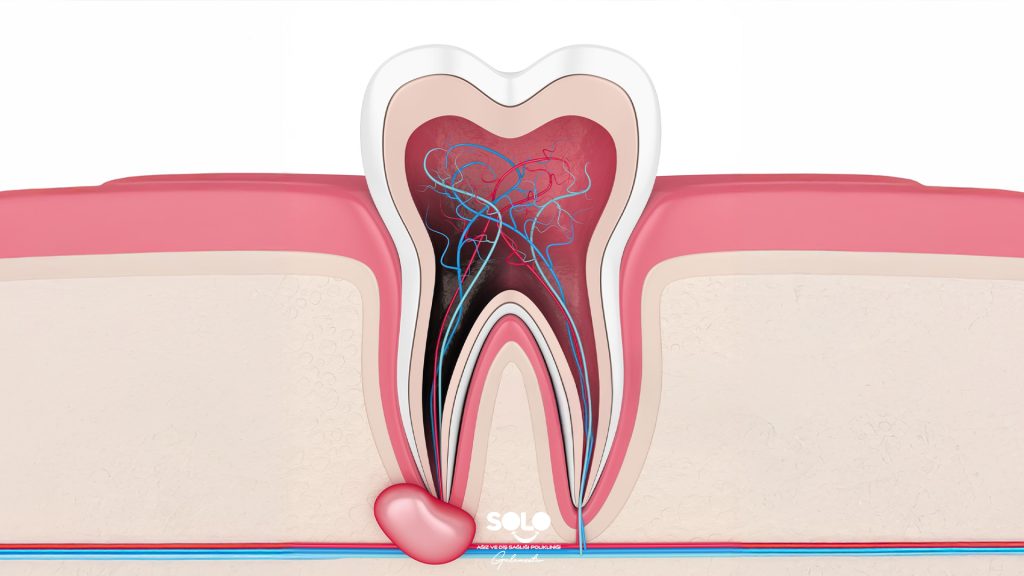
It is generally preferred in teeth that do not heal despite root canal treatment, cause occasional pain, or still show signs of inflammation at the root tip on X-rays. In some cases, even when a root canal treatment has been performed very well technically, the infection at the root tip can be persistent. In such situations, apical resection becomes an alternative to tooth extraction, which is often seen as a “last resort.”
The most important goal of this procedure is to keep the tooth in the mouth for as long as possible. Because no artificial treatment can truly replace a natural tooth. With apical resection, the infected tissue is removed, the problem at the root tip is resolved, and the tooth can continue to function healthily. When applied in the right cases, it both relieves the patient from ongoing pain and helps prevent tooth loss.
When Is Apical Resection Necessary?
Root canal treatment is one of the most commonly used procedures in dentistry and often produces very satisfying results. Many teeth can remain in the mouth for years without problems thanks to root canal treatment. However, not every tooth is the same, and not every issue can be solved with a single method. In some cases, no matter how carefully the root canal treatment is performed, the problem at the root tip may not completely disappear.
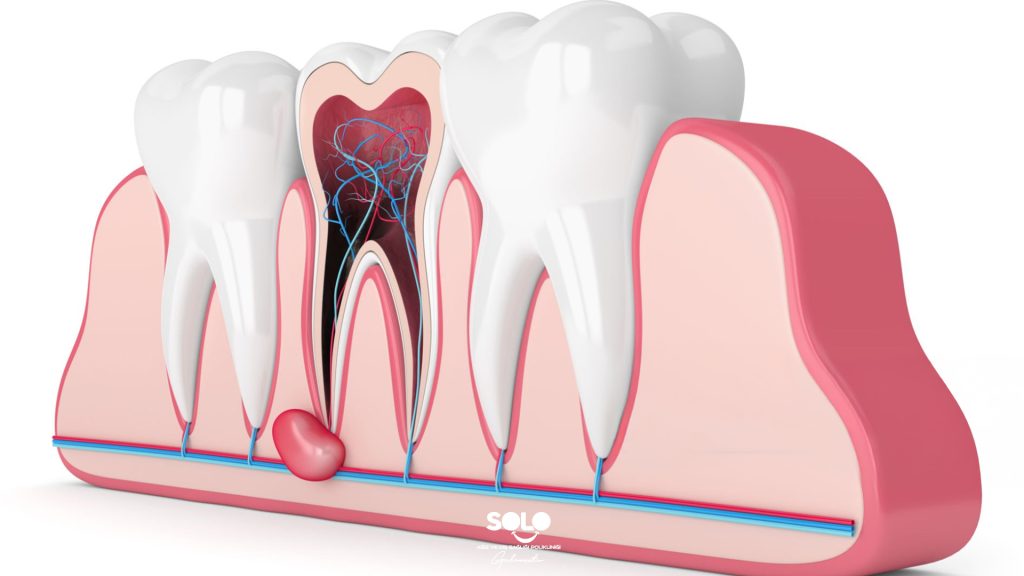
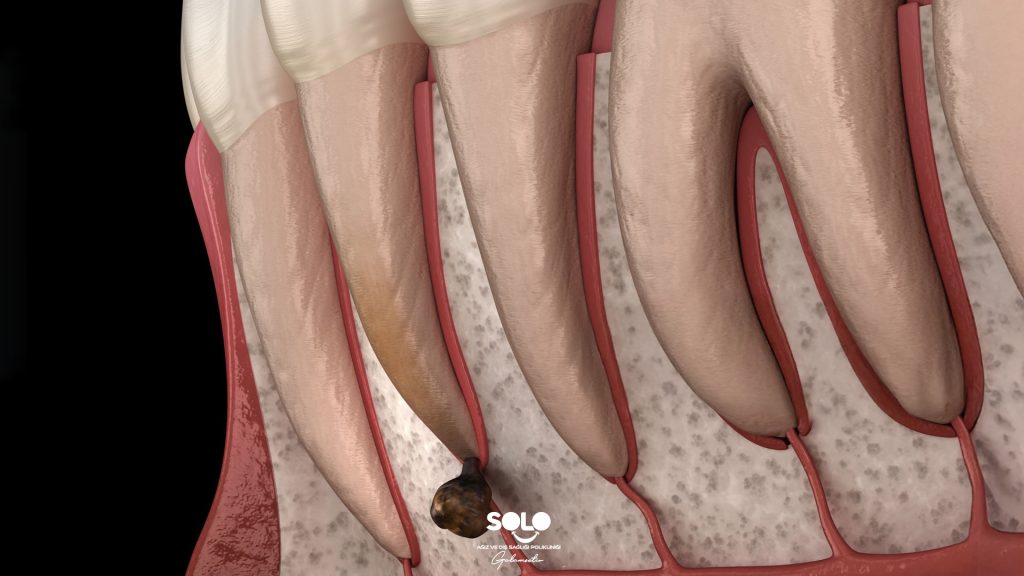
Especially in teeth with complex root structures, it can be difficult to reach all the canals if they are very thin or curved. Sometimes, a previous root canal treatment may not be deep enough or fully sealed. As a result, inflammation at the root tip can quietly persist and eventually show itself as pain, sensitivity, or swelling. At this stage, apical resection becomes an important option to consider before deciding on tooth extraction.
Apical resection is generally preferred in the following situations:
-
Persistent pain and sensitivity despite having a root canal treatment
-
The presence of a cyst, abscess, or chronic infection at the root tip
-
Broken instruments or residual filling materials inside the root canal that cannot be removed
-
Cracks or recurring infection areas detected at the root tip
-
When the overall structure of the tooth is healthy and extraction is to be avoided
How Is Apical Resection Performed?
Apical resection is not as difficult or frightening as many people imagine. It is usually performed under local anesthesia, meaning the patient is awake but does not feel pain during the procedure. The dentist first numbs the area completely and then makes a small incision in the gum to access the root tip. The goal here is to focus only on the problematic area and to interfere with healthy tissues as little as possible.
Once the root tip is reached, the infected tissue and the problematic part of the root tip are carefully removed. This step is the most critical part of the procedure, as it eliminates the source of pain and infection. After cleaning is completed, a special filling material is used to seal the root tip and prevent bacteria from entering again. Finally, the gum tissue is placed back into position and the procedure is completed with a few small stitches.
The procedure usually takes between 30 and 60 minutes. Depending on the position of the tooth, the root structure, and the extent of the infection, this time may vary slightly. However, for most patients, the procedure is shorter and more comfortable than expected.
Is Apical Resection a Painful Procedure?
This is one of the most common and understandable concerns patients have. To be clear, no pain is felt during the procedure itself. Thanks to local anesthesia, the patient remains comfortable throughout the treatment.
After the procedure, mild pain, swelling, or sensitivity may occur. This usually decreases on its own within a few days. With the painkillers recommended by the dentist, this period can be managed quite easily. Most people are able to return to their daily routines after a short period of rest.
Recovery Process After Apical Resection
The recovery process after apical resection is generally smooth and comfortable for most people. Of course, everyone’s healing speed is different, but usually being a bit careful during the first few days is enough. Avoiding hot foods and drinks in the first 24 hours, not straining the stitched area, and staying away from hard foods can positively affect healing. Oral hygiene should not be neglected, but the treated area should be cleaned gently.
Using the medications prescribed by the dentist regularly helps make this process more comfortable. Stitches are usually removed within 7 to 10 days, and after that, patients tend to feel much more at ease. Complete healing of the bone and surrounding tissues may take a few months, but this period generally does not interfere with daily life, and most patients return to their normal routines quickly.
Is Apical Resection a Permanent Solution?
An apical resection that is performed correctly and supported with good oral care can function smoothly for many years. Of course, oral hygiene, regular dental check-ups, and overall health directly influence this process.

