
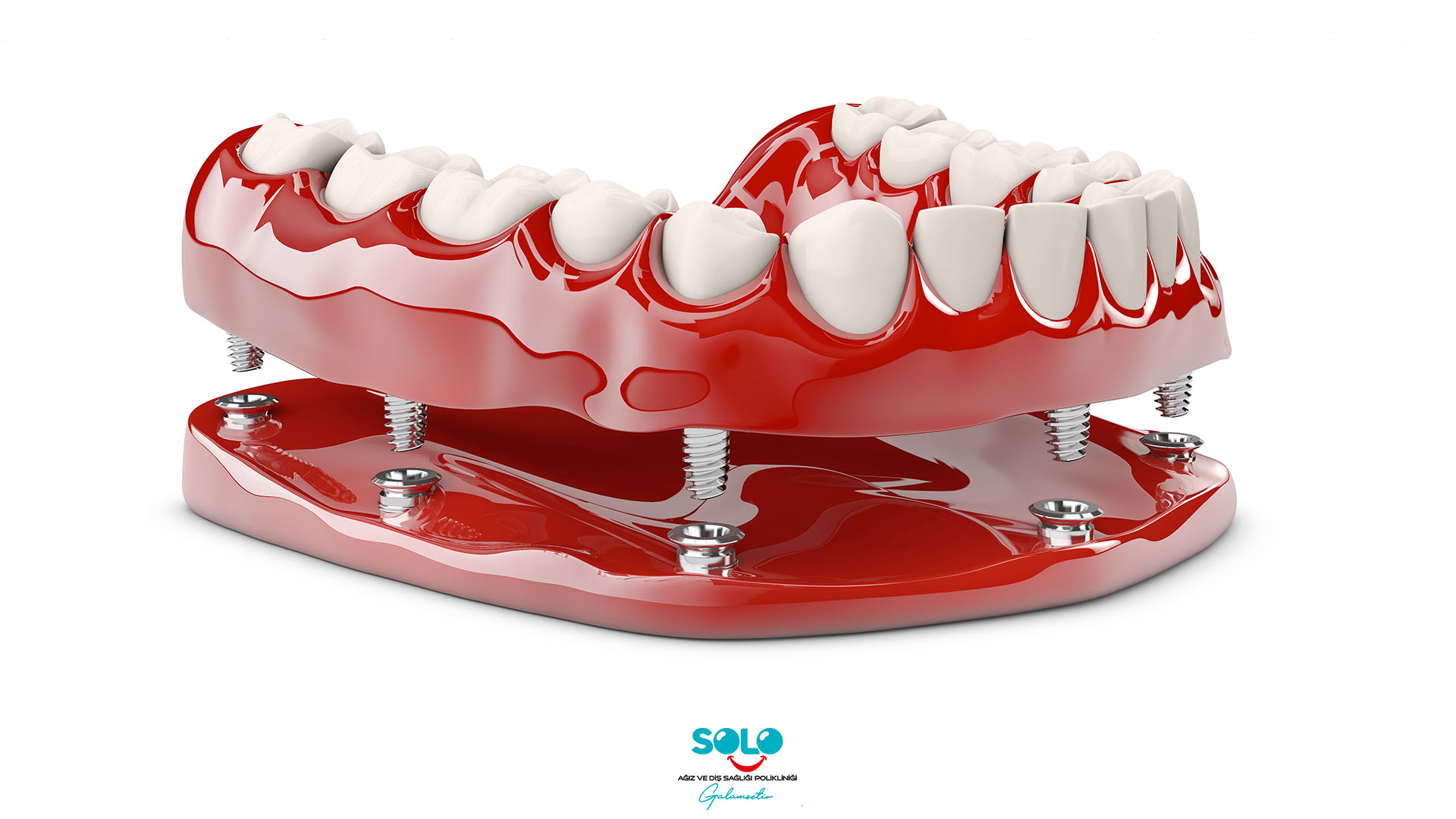
Implant Supported Prosthesis
Tooth loss is a common problem that many people face in their lives and if left untreated, it can seriously negatively affect oral health and general aesthetics. Missing teeth not only weaken chewing functions and disrupt eating habits, but also deeply shake a person’s self-confidence. These deficiencies, which are felt even in daily activities such as social life, speaking and smiling, can lead to greater health problems over time. However, today, modern dentistry offers various advanced treatment methods to solve this problem.
One of the most effective methods for eliminating tooth loss is implant-supported prosthesis applications. Implants are a preferred treatment option for restoring the function and aesthetics of natural teeth in the best way possible in eliminating tooth loss. Implants replace the missing tooth with titanium screws placed in the jawbone and are perfectly compatible with the prostheses made on it. This treatment method offers extremely satisfactory results not only in terms of dental health but also in terms of aesthetics.
What is an Implant-Supported Denture?
Implant-supported dentures are artificial teeth placed on dental implants placed in the jawbone to replace lost teeth. Dental implants are placed in the jawbone in the form of screws made of titanium and fulfill the function of natural tooth roots. Prosthetics that allow the lost teeth to be completely restored in terms of aesthetics and functionality are attached to these screws.
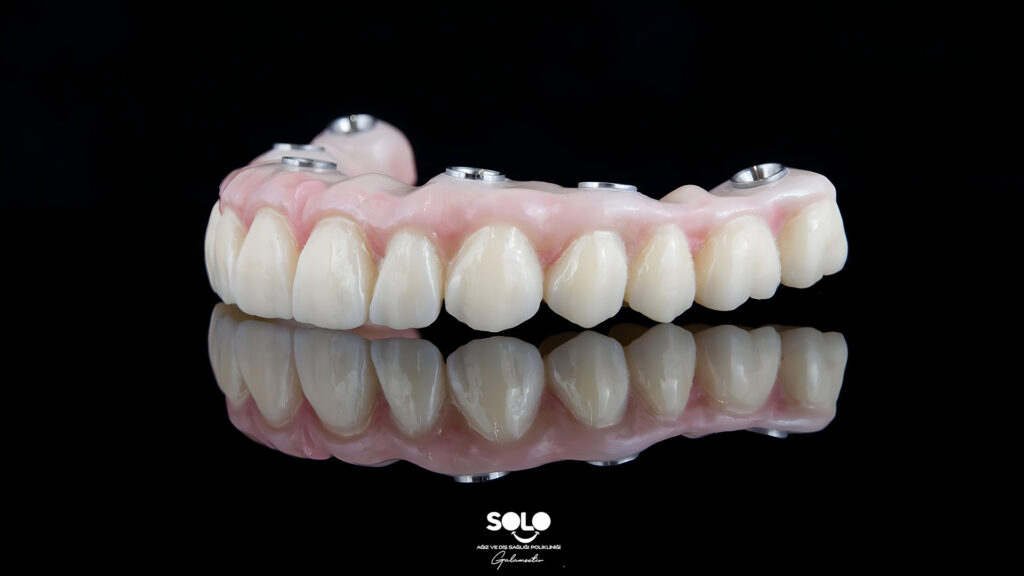
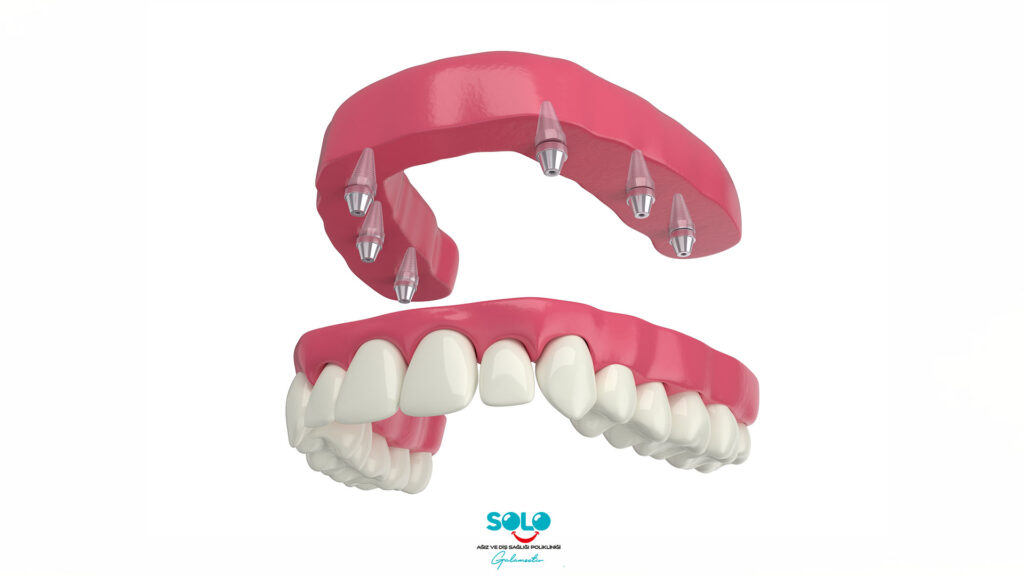
Implant-supported dentures are generally examined in two main groups: fixed dentures and removable dentures. Fixed dentures are fixed by the dentist after being placed on the implant and cannot be removed by the user for a long time. These dentures offer a very effective solution for ensuring the functions and aesthetics of the teeth. Removable dentures are artificial teeth that the user can easily remove and reattach. These types of dentures offer an easier option in terms of cleaning and generally provide a more flexible use.
Both types of dentures are among the successful treatment methods that restore the functions and aesthetics of natural teeth for individuals who have lost teeth. Implant-supported dentures not only improve chewing function, but also provide aesthetically pleasing results.
Who Can Get Implant-Supported Dentures?
Implant-supported dentures are a modern treatment method that offers an effective and permanent solution for people who have lost teeth. However, they may not be suitable for every individual. Therefore, certain criteria must be met for implant treatment to be successful. Implant-supported dentures are applied by taking into account certain health conditions and jaw structures.
People Who Have Lost Teeth Tooth loss is the most common reason for implant-supported dentures. People who have lost a single tooth or multiple teeth can benefit from implant-supported dentures if their jawbone structure is suitable. This treatment offers an effective alternative for replacing lost teeth, both functionally and aesthetically.
Individuals with Healthy Jawbones In order for implants to be placed, the jawbone must be of sufficient density and health. If there is excessive loss or damage in the jawbone, bone grafting (bone reinforcement) may be required before implant application. However, in general, individuals whose jawbones are sufficiently strong are suitable candidates for implant-supported dentures.
People with Good General Health Implant-supported denture treatment is suitable for people with good general health. It is important for individuals who have diabetes, cancer treatment or other diseases that weaken the immune system to consult their doctor before implant treatment. Otherwise, the healing process may be difficult or complications may occur.
People with Aesthetic Concerns Tooth loss can cause serious problems not only functionally but also aesthetically. Implant-supported dentures, which are an important step for smile aesthetics, provide an aesthetic replacement for lost teeth. Therefore, it can be an ideal solution for individuals with aesthetic concerns.
How to Make an Implant-Supported Denture
Implant-supported denture application is a process consisting of several stages. First, the implants that will replace the lost teeth are surgically placed in the jawbone. At this stage, the jawbone must have sufficient density, because a solid bone structure is needed for the implant to be successful.
After the implants are placed, a few months are waited to ensure integration with the jawbone. During this period, the implants fuse to the jawbone and form a foundation like a natural tooth root. This integration process usually varies between 3 and 6 months, but this period may vary depending on personal factors.
After the implants fuse with the jawbone, the dentist begins the prosthesis application. The prosthesis is prepared in the laboratory after special measurements are taken and then placed on the implant. This stage allows the prostheses to be made as close to the natural structure of the teeth as possible.
Advantages of Implant-Supported Dentures
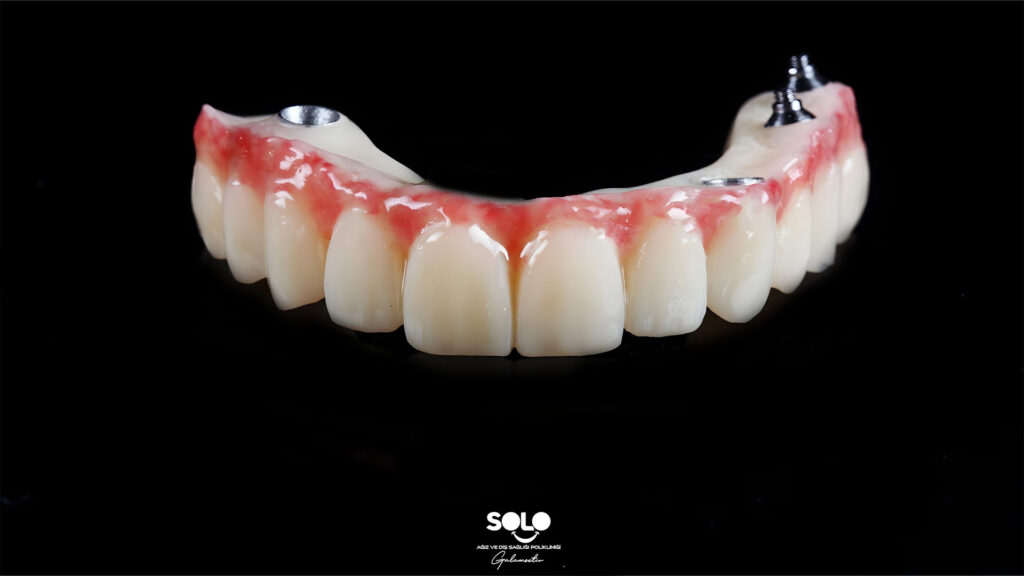
Implant-supported dentures provide an excellent alternative to lost teeth by providing an extremely natural appearance in terms of aesthetics. These dentures, which can be designed to fully adapt to the natural form of the teeth, are quite successful in terms of both aesthetics and functionality, because they perform the chewing function like natural teeth and remain fixed in the mouth, not slipping.
Implants that fuse with the jawbone eliminate this risk by preventing bone loss over time, while other types of dentures may cause osteoporosis. Implant-supported dentures are long-lasting and durable, because titanium implants provide perfect harmony with the jawbone. Moreover, this treatment does not harm the surrounding healthy teeth, because while other types of dentures usually require cutting or filing the teeth, such an intervention is not made in implant application.
Disadvantages;
Implant-supported dentures offer aesthetic and functional advantages, but they also have some disadvantages. First of all, this treatment option can be more expensive than other types of dentures because both the implant placement and the prosthesis manufacturing costs are high. However, when the long-term benefits are considered, this cost may be reasonable for most patients. In addition, implant application can be risky for some patients because it requires a surgical intervention, and the healing process can take time. However, today’s dentistry techniques usually manage this process quickly and successfully.
Another disadvantage is that implant treatment is not suitable for every patient. Implant application may not be possible for patients whose jawbone is not healthy enough, and in this case, additional treatment methods such as bone grafting may be needed. Finally, the healing process after implant placement may vary from person to person; some patients experience a rapid healing process, while others may need a longer period.
Implant-supported Denture Prices
Implant-supported denture prices may vary depending on various factors. These factors include the type of material used, customization of the denture design, the jaw area where the implant will be placed, the surgical intervention process, and additional services during the treatment process. In addition, the experience and clinical preferences of the dentist performing the treatment are also important factors affecting the prices. In addition, some patients may require bone grafts or additional treatment methods, which may increase the cost.
Although implant-supported dentures initially cost more due to their longevity and durability, this investment can be a very reasonable option for many patients when the long-term benefits they provide are considered. Treatment prices may also vary depending on the region where the application is made and the quality of the clinical services. In order to obtain precise pricing information for implant-supported denture treatment and determine the most appropriate treatment plan, it is important to have a detailed examination and evaluation with the dentist.

