

How Does Tartar Form?
Have you ever noticed a yellowish or brownish, hard and stubborn layer on your teeth when you look in the mirror? No matter how much you brush, it doesn’t seem to go away and almost looks like a natural part of the tooth. In most cases, this is tartar. Many people see it as nothing more than an aesthetic issue a small detail that dulls a smile. In reality, however, tartar is a sign of a much more serious process that progresses quietly in the mouth and often grows unnoticed.
Tartar is essentially dental plaque that has not been cleaned regularly and has hardened over time. While it may seem harmless at first, problems begin as soon as it comes into contact with the gums. It can be the first link in a chain that leads to gum bleeding, bad breath, sensitivity, and even tooth loss. The most dangerous part is that it usually progresses without causing pain. In other words, “it doesn’t hurt” does not mean there is no problem.
Oral health is an inseparable part of overall health, and tartar is a warning sign within this whole that should not be ignored. That hard layer you can see is actually whispering that it’s time to rethink your oral care habits. In this article, we will take a detailed look at how tartar forms, why it is so important, and how it affects not only your smile but also your health. Because sometimes a small detail we notice in the mirror carries a much bigger message than we expect.
What Is Tartar?
Tartar is the hardened form of bacterial plaque that quietly accumulates on the surface of the teeth over time. It doesn’t suddenly appear overnight. At the beginning of this process, a thin, sticky layer forms one you often can’t even notice when looking in the mirror. This layer, which adheres to the tooth surface, is called plaque, and it continues to grow day by day, fed by the foods and drinks we consume.
When plaque is not cleaned regularly and properly, it combines with minerals found in saliva. This interaction causes the soft layer to gradually harden. Once it hardens, it can no longer be removed with an ordinary toothbrush. No matter how hard you brush, it won’t budge. From that moment on, it is called tartar.
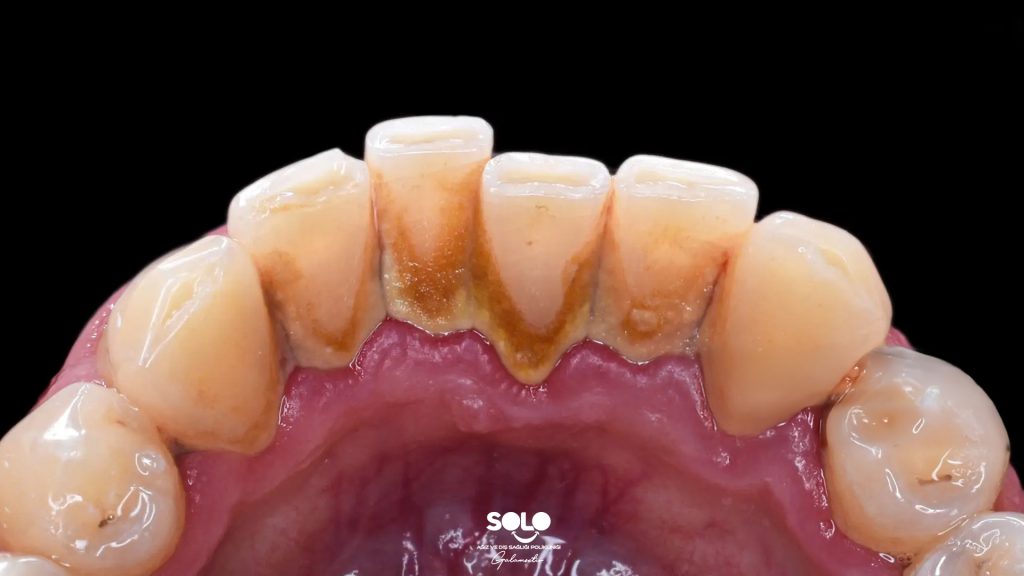
In fact, tartar is not “a problem that appears all of a sudden,” but rather the natural result of small neglects accumulating over time. A skipped brushing, a rushed oral care routine, or a postponed dental check-up… When they all come together, tartar finds its place. That’s why tartar is a quiet yet powerful reminder that tells us to pause and rethink our oral care habits.
Everything Starts With Plaque
The answer to the question “How does tartar form?” is actually quite simple: everything starts with plaque. Almost everything we eat and drink throughout the day bread, fruit, tea, coffee, sweets, even seemingly harmless snacks leaves microscopic residues on our teeth. We don’t see them, but for the bacteria living in our mouths, these residues are an open buffet.
Naturally occurring bacteria in the mouth begin feeding on these residues. As they feed, they multiply, and as they multiply, they form a sticky, colorless layer that clings to the tooth surface. This layer, which may feel slippery if you touch it, is called dental plaque. At first, it seems harmless because it is soft and can be easily removed with regular, proper brushing.
However, plaque is often something people postpone, thinking “I’ll brush later.” One day turns into two, and it remains in the mouth. This is where the real problem begins. Plaque that isn’t removed adapts to the oral environment over time, becomes stronger, and forms a tighter bond with the tooth. What starts as a harmless sticky layer eventually becomes the first and most important step in tartar formation.
Where Does Tartar Most Commonly Form?
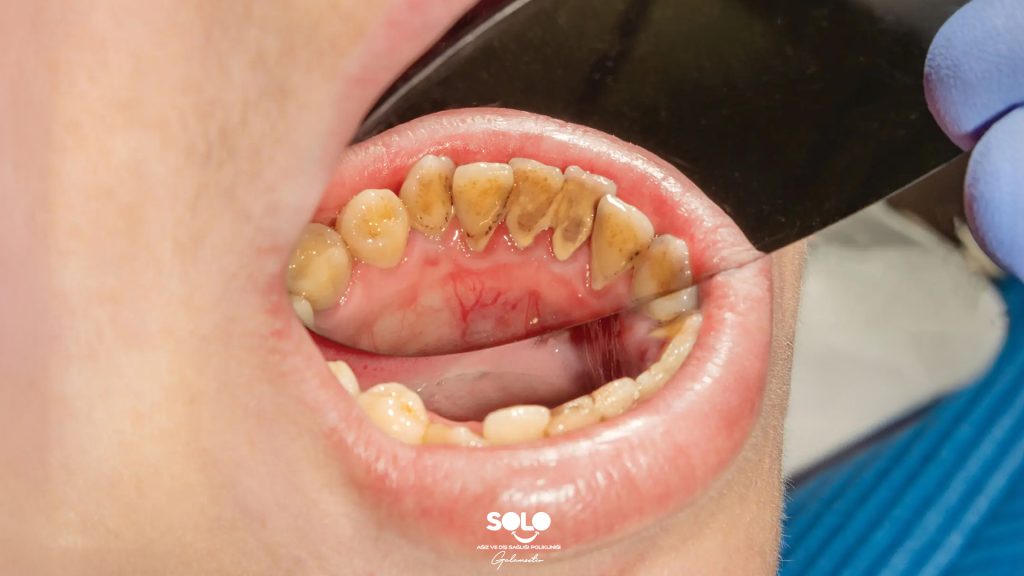
Tartar does not appear randomly in the mouth. On the contrary, there are certain areas that are particularly “favorable” for tartar formation. That’s why it tends to show up repeatedly in the same places.
The inner surfaces of the lower front teeth (tongue side) and the outer surfaces of the upper back teeth (cheek side) are the most common areas where tartar forms. The main reason is that these regions are very close to major salivary glands. While saliva is essential for oral health, the minerals it contains can accelerate the hardening process when combined with plaque. In other words, plaque turns into tartar more quickly in areas with higher saliva flow.
Another important factor is brushing habits. Many people, without realizing it, focus more on the visible front surfaces of their teeth while brushing. The areas we see in the mirror get cleaned, but the inner surfaces or the cheek facing sides of the back teeth are often neglected. These “forgotten” areas become ideal environments for tartar to form.
What’s interesting is that because the problem usually starts in these out-of-sight areas, it is noticed late. Since the front surfaces of the teeth look clean, a person may think everything is fine. Meanwhile, tartar quietly builds up in hidden corners and begins to affect oral health by the time it becomes noticeable.
Why Isn’t Tartar Just an Aesthetic Problem?
Tartar is often perceived as nothing more than a “cosmetic flaw.” However, the issue goes far beyond the color of the teeth or the appearance of a smile. Tartar is a serious problem that creates the groundwork for many oral health issues to develop silently.
Tartar that accumulates on the tooth surface especially along the gum line creates a safe hiding place for bacteria. Because these bacteria are in constant contact with the gums, redness, sensitivity, and inflammation can develop over time. Mild bleeding noticed during brushing is often ignored, but these small signs are actually warnings of a much bigger underlying problem.
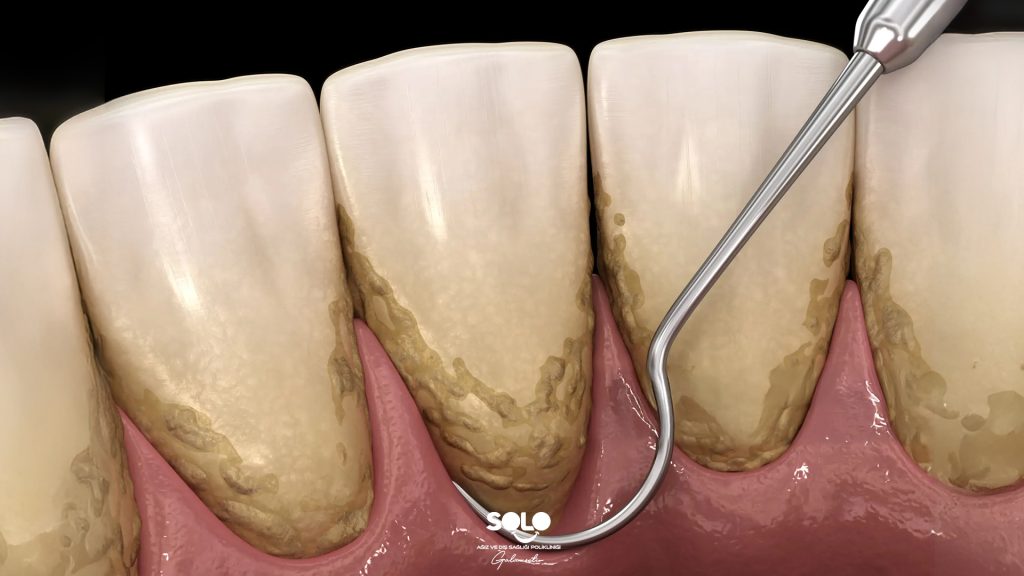
Tartar is also one of the most common causes of bad breath. Its porous structure makes it easy for bacteria to cling to and multiply. Over time, these bacteria cause unpleasant odors that can become persistent, no matter how much you brush.
As the problem progresses, the gums begin to pull away from the teeth, leading to gum recession. As tooth roots become exposed, sensitivity increases and teeth become more vulnerable. If left untreated, this process can damage the supporting tissues of the teeth and may even result in tooth loss.
How Is Tartar Removed?
Tartar removal goes beyond daily at-home oral care and is a professional procedure. Once tartar hardens, it cannot be removed with a toothbrush, dental floss, or mouthwash. For this reason, tartar must be removed by a dentist using specialized instruments. Ultrasonic devices and hand tools are used to gently clean tartar from the tooth surface. The procedure is usually painless; you may only feel slight vibrations or a cool sensation. After cleaning, the tooth surfaces feel smoother, the gums relax, and the mouth feels fresh.
After tartar removal, the most important step is preventing it from forming again by reassessing daily habits. Regular and proper brushing, using dental floss, and visiting the dentist at recommended intervals significantly reduce the risk of tartar returning. Tartar removal alone is not a “final solution”; it is an opportunity to make a fresh start for your oral health. Supporting this opportunity with the right care habits is the most valuable step toward healthy teeth and gums.

