
What Is a Dental Lesion?
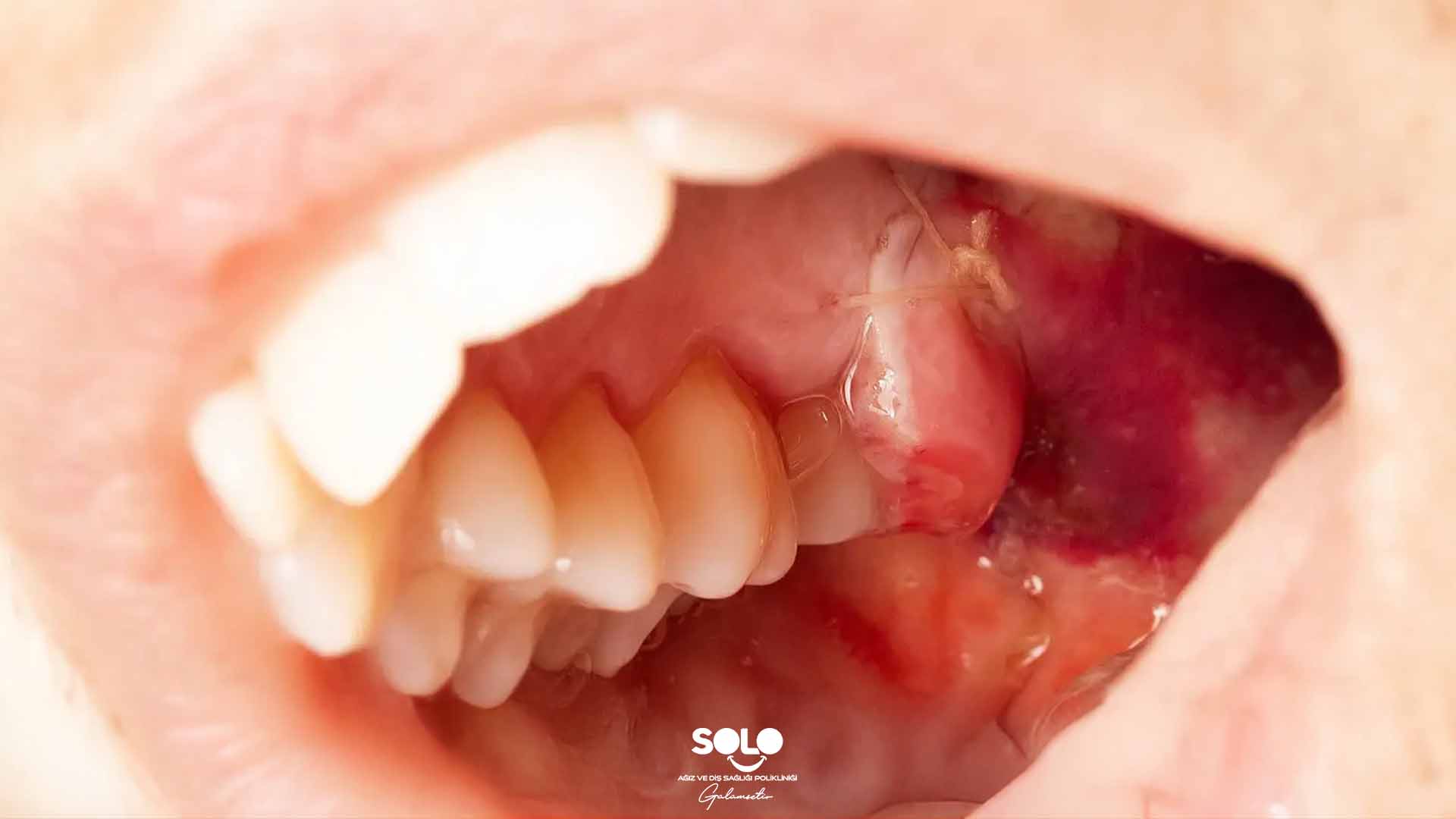
When you have a dental issue and your dentist says during the examination, “there is a lesion on your tooth,” it’s completely normal to feel a brief moment of worry. The word “lesion” sounds medical, serious, and a little intimidating. Many people immediately imagine the worst. But in reality, the term is not as complicated or frightening as it seems.
In the simplest terms, a dental lesion means a change in the tissue. In other words, it indicates that something in the structure of the tooth or the surrounding tissues is different from normal. This could be a small, visible cavity starting to form, wear or a crack in the enamel, or even a sign of infection developing at the tip of the tooth root. In short, a “lesion” is not a disease by itself; it is a finding that tells us something is not quite right.
Our teeth face constant challenges every day hot and cold foods, sugar, acids, and even habits we may not notice, like teeth grinding or brushing too hard. Over time, these factors can cause small changes in the tooth structure. What dentists call a “lesion” is often simply the name for these changes. When detected early, most lesions can be managed easily with a simple filling, routine monitoring, or minor treatment.
The most important thing to remember is this: early diagnosis may not save a life, but it can save your tooth. Many dental problems begin quietly. Because they don’t cause pain at first, they’re often postponed. However, a small lesion discovered during a routine check-up can prevent much bigger and more complicated treatments later on. So instead of panicking when you hear the word, it’s much healthier to see it as an “early warning sign.”
Why Does a Dental Lesion Occur?
Dental lesions are often caused by very “everyday” factors. Our teeth go through a real battle each day. The hot tea we drink in the morning, the coffee during the day, acidic beverages, sweet snacks… All of them leave small but meaningful effects on the tooth surface. If proper and regular cleaning is not added to the equation, plaque builds up and creates the perfect environment for bacteria. When bacteria combine with sugar, they produce acid, and this acid slowly weakens the enamel. What starts as a small white spot can gradually darken and turn into a cavity. In fact, the most common type of lesion is simply the early stage of tooth decay.
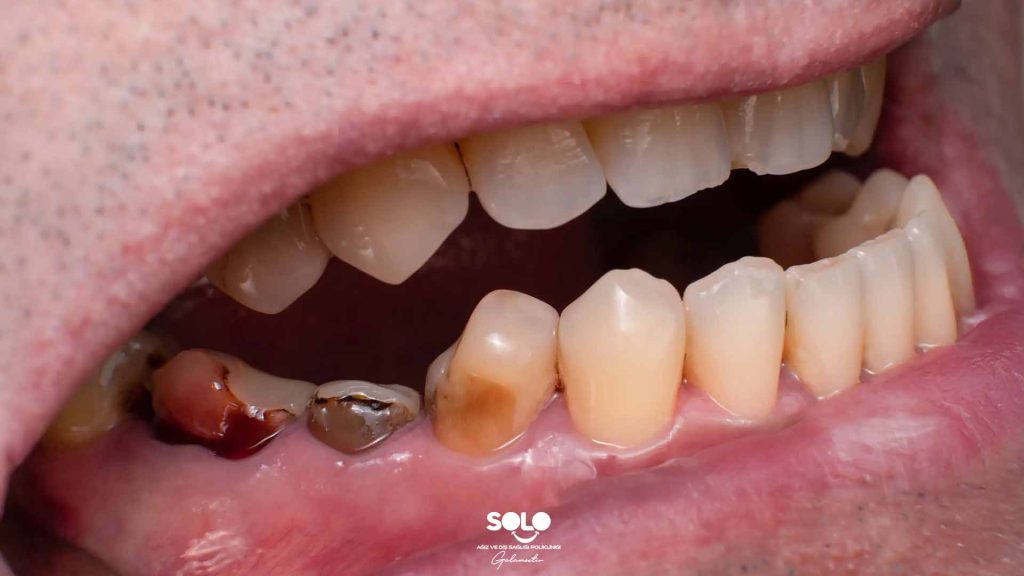
Sometimes the issue isn’t decay but trauma. A blow to the tooth, biting something very hard, or even small unnoticed accidents can create cracks on the tooth surface. Not every crack is clearly visible from the outside; in fact, a person may not notice anything for a long time. Yet microscopic damage may have already occurred inside the tooth. Similarly, gum problems can lead to inflammation around the root tip, which appears as a “lesion” on an X-ray. Especially in long-neglected cavities or cases requiring root canal treatment, the dark area seen at the root tip is actually the body’s response to infection.
There are also changes that develop gradually over time. Frequent consumption of acidic drinks, conditions like acid reflux that bring stomach acid into the mouth, or even brushing too aggressively can wear down enamel. Many people are not even aware that they grind their teeth at night. Over the years, grinding and clenching can cause visible wear and increased sensitivity on the tooth surface.
Symptoms of a Dental Lesion
A dental lesion does not always make itself known right away. In fact, most of the time it progresses silently without causing pain, and the person only learns about it during a routine dental check-up. But sometimes the body sends small signals. Sudden sensitivity when drinking hot tea or cold water, a brief ache after eating something sweet, or discomfort in a specific area while chewing can all be subtle ways of saying, “something is changing here.” Color changes in the tooth or a dark spot you notice in the mirror should not be ignored either.
Especially in lesions that develop at the root tip, swelling around the gum, tenderness when pressed, or throbbing pain may occur. Sometimes the pain can be quite intense, and other times the condition progresses completely silently without any symptoms at all. That’s exactly why regular dental check-ups are so important.
How Is a Dental Lesion Treated?
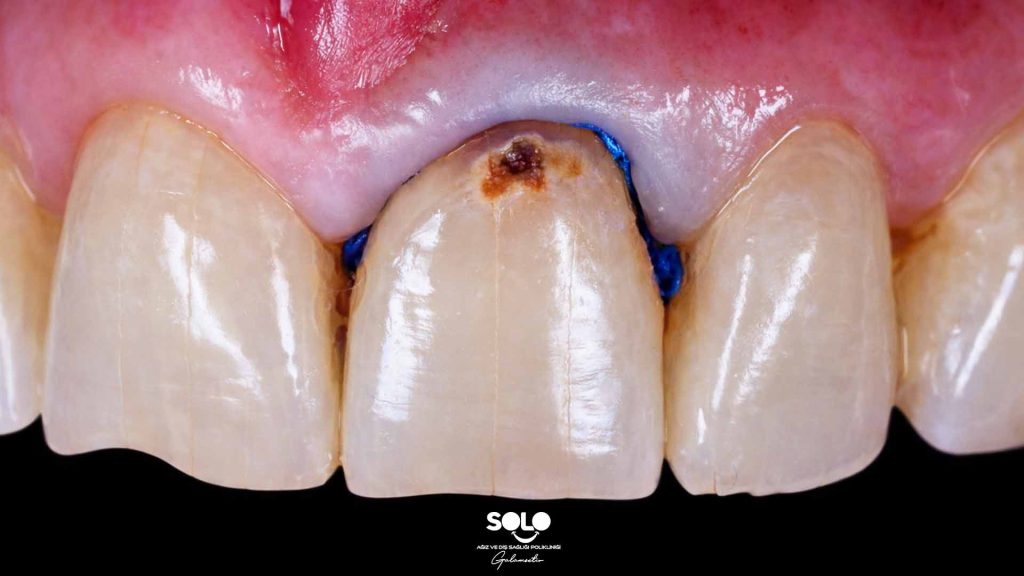
When it comes to treating a dental lesion, there is no single standard approach. Every lesion is different; some are detected very early, while others have progressed deeper. If the issue is caught at an early stage, meaning the decay is still superficial, fluoride applications and regular monitoring may be enough to stop its progression. Problems detected at this stage are usually resolved more easily and comfortably. If it has progressed, the decayed tissue is removed and the tooth is restored with a filling. For most people, this procedure is much quicker and smoother than they expect.
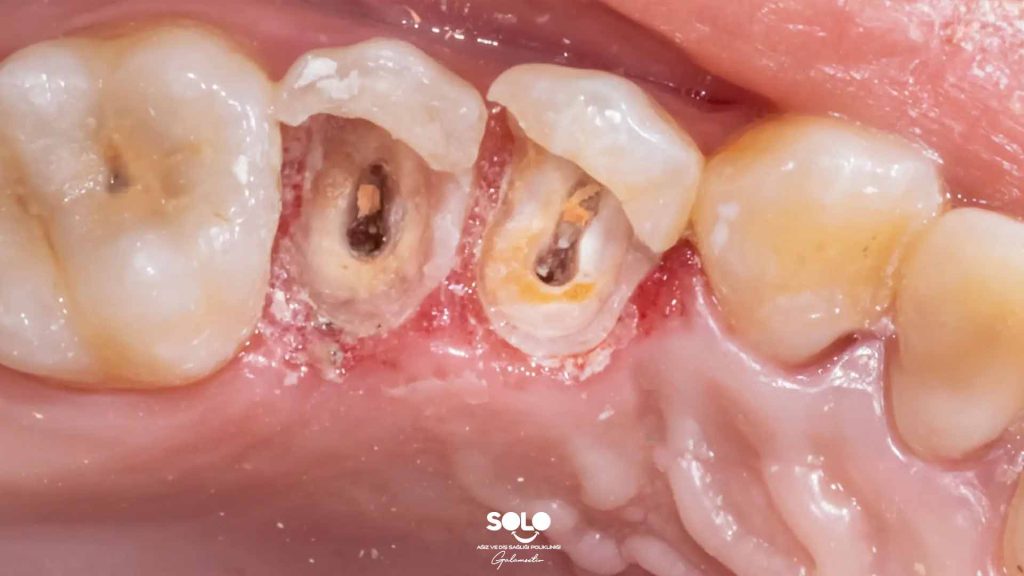
However, if the lesion has reached the nerve or if an infection has formed at the root tip, root canal treatment may be necessary. The goal at this stage is to remove the infected tissue, disinfect the root canals, and fill them again to preserve the natural tooth. Although it may sound intimidating, modern root canal treatment is a controlled and safe procedure. In rare cases, the lesion at the root tip may need to be surgically removed; this procedure is called apical resection and is reserved for more specific situations.
The common goal of all these treatments is clear: eliminate the infection, relieve pain, and keep your natural tooth in your mouth whenever possible. Your own tooth is always the most valuable option. Thanks to early diagnosis, most lesions can be treated before they grow and lead to tooth loss.
What Happens If a Dental Lesion Is Not Treated?
A small dental lesion may seem harmless at first. If it doesn’t hurt, it’s very easy to postpone it. Telling yourself, “It’s manageable for now,” or “I’ll wait a little longer,” feels familiar to many of us. But dental problems do not heal on their own. On the contrary, they tend to progress deeper over time. A simple cavity can move from the enamel to the inner layers of the tooth and eventually reach the nerve. At that point, pain is often unavoidable and more complex treatment becomes necessary.
Lesions at the root tip may also progress quietly. From the outside, everything may look normal, but gradual damage can occur in the surrounding bone. If left untreated, this can lead to bone loss, tooth mobility, and eventually tooth loss. Moreover, chronic infections in the mouth do not always stay localized; they can affect overall health as well. That’s why, when a lesion is detected, choosing early intervention instead of saying “it will pass” is always the healthier and safer option.
Can a Dental Lesion Be Prevented?
While it may not always be possible to eliminate the risk completely, you can significantly reduce it. The foundation lies in simple daily habits: brushing your teeth properly at least twice a day, making flossing part of your routine, and limiting sugary and acidic foods can make a bigger difference than you might think. If you struggle with teeth grinding, using a night guard instead of ignoring the problem can protect your teeth for years. And perhaps most importantly, visiting your dentist regularly even if you feel no pain matters greatly, because many problems begin silently and are much easier to treat when caught early.
Remember, major dental issues rarely appear overnight; they are often the result of small neglect over time. A simple step you take today can prevent much more complicated treatment tomorrow. Make a small but meaningful decision for yourself: Don’t postpone your dental care and schedule a check-up as soon as possible. Your teeth deserve it.

