

What Is Dental Curettage? Regain Your Gum Health
When we talk about dental health, most of us first think of cavities, fillings, or a whiter smile. The teeth we see in the mirror usually take center stage; yet the real structure that holds, nourishes, and protects them is the gums. If the gums are not healthy, even the best-looking teeth can lose their strength over time. Unfortunately, gums often don’t receive the attention they deserve, and problems tend to progress quietly.
One of the most dangerous aspects of gum problems is that they often cause no pain. Mild redness, a few drops of blood while brushing, or sensitivity that develops over time may be seen as “nothing serious.” In the rush of daily life, these small signals are easily ignored. However, when neglected, gums don’t react all at once; they worsen slowly but steadily. By the time the issue is noticed, it may no longer be limited to the gums and can progress to much more serious conditions, including tooth loss.
In fact, gums are one of the body’s early warning systems. With proper care and regular check-ups, many gum problems can be stopped at a very early stage. Despite this, many people do not visit the dentist unless pain begins or a visible problem appears. Yet gum health is not limited to the mouth alone; it is closely connected to overall health. Healthy gums are the foundation of strong chewing function and the ability to smile freely and confidently.
What Is Dental Curettage?
Dental curettage is a treatment method that many people feel hesitant about when they first hear its name, yet it is extremely important for gum health. In its simplest form, it is a deep cleaning procedure used in the treatment of gum diseases. However, describing curettage as merely “a cleaning” does not fully reflect how critical this procedure actually is.
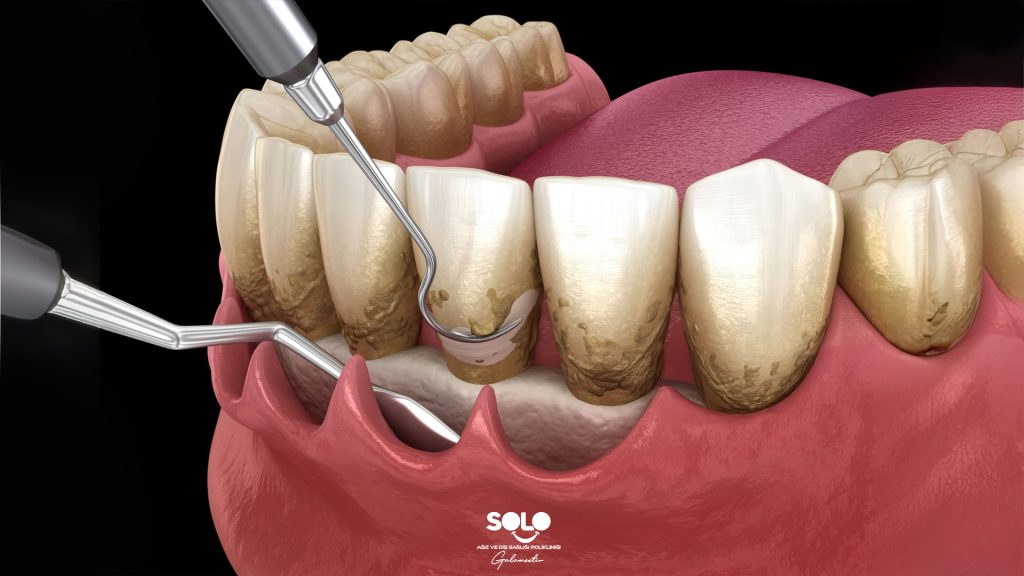
Over time, dental tartar, bacteria, and inflamed tissues accumulate in the spaces between the tooth and the gum, known as pockets. These deposits are not visible to the eye, which is why they often go unnoticed. Yet the real source of gum problems is usually hidden in these very areas. This is where dental curettage comes into play. With the help of special instruments, the dentist goes beneath the gum line and carefully removes all harmful accumulations that threaten oral health.
A common misconception is that regular scaling and curettage are the same procedure. In reality, standard scaling removes tartar from the visible surfaces of the teeth and serves more as preventive care. Dental curettage, on the other hand, goes a step further by targeting the areas that are not visible but are responsible for worsening the problem. For this reason, curettage is often referred to as “deep cleaning.”
The goal of dental curettage is not only to remove existing inflammation. It also helps the gums reattach to the teeth in a healthy way and prevents the disease from progressing. When performed at the right time and in the right manner, it can even help prevent tooth loss.
When Is Dental Curettage Necessary?
Dental curettage is usually not a procedure that becomes necessary overnight; rather, it is the result of signals that the gums have been giving for a long time. Most gum diseases begin with plaque buildup, a common but often unnoticed problem. Plaque that is not properly removed during daily oral care hardens over time and turns into tartar. Tartar, in turn, becomes a safe haven for bacteria and can no longer be removed with brushing alone.
As these bacteria come into contact with the gums, early symptoms slowly begin to appear. Redness, mild swelling, and bleeding during brushing are usually the first signs of this process. Many people interpret these symptoms as “temporary sensitivity” or “normal bleeding” and choose to ignore them. In reality, these signs are the gums’ way of asking for help.
If no action is taken at this stage, the problem deepens. The gums gradually begin to separate from the tooth surface, forming pockets between the tooth and the gum. As these pockets deepen, they create an even more favorable environment for bacteria, allowing inflammation to spread further. Over time, not only the gums but also the bone that supports the teeth can be affected. When bone loss begins, a sensation of looseness in the teeth may occur.
Who Is Dental Curettage Applied To?
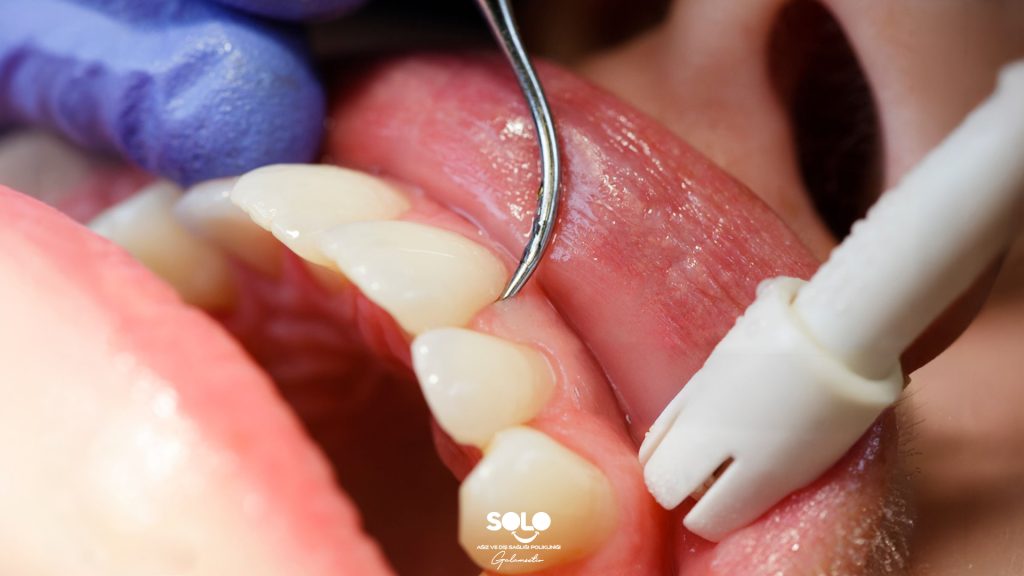
Dental curettage is not a routine procedure performed on everyone. It is generally recommended when certain signs indicate that the gums have been struggling with a problem for some time. Persistent gum bleeding, noticeable gum recession, chronic bad breath, or ongoing inflammation despite regular scaling are among the most common reasons. Additionally, people who notice fullness in the gums, sensitivity, or slight looseness in their teeth may also require curettage. All of these signs suggest that the issue is progressing beneath the gum line rather than on the surface.
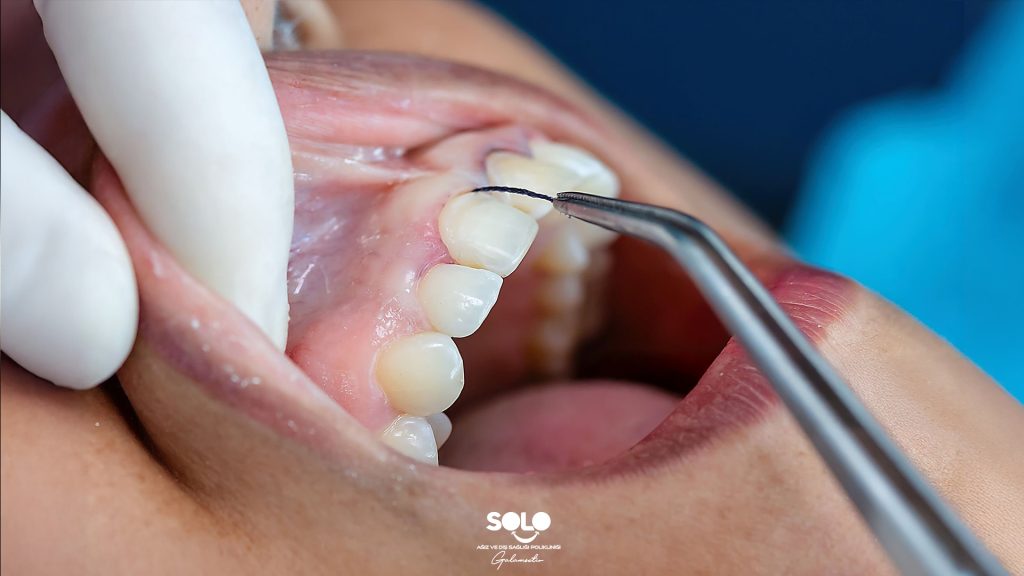
At this point, the dentist evaluates the situation by measuring the gum pockets with a special instrument. In healthy gums, these pockets are quite shallow; however, as inflammation progresses, pocket depth increases. If measurements exceed normal limits, dental curettage becomes part of the treatment plan. The goal is to control the problem before it worsens, restore the gums to a healthy state, and prevent tooth loss. When performed at the right time, curettage represents an important step toward healing for many patients.
How Is Dental Curettage Performed?
Dental curettage is not as intimidating as many people imagine. The procedure is usually performed under local anesthesia, meaning the area is numbed and the patient does not feel pain during treatment. At most, a mild pressure or vibration may be noticed, which simply indicates that the procedure is being carried out without causing discomfort. The main goal is to thoroughly clean the area beneath the gums while keeping the patient as comfortable as possible.
Using specially designed hand instruments or ultrasonic devices, the dentist works beneath the gum line to carefully remove tartar, bacteria, and inflamed tissue. In some patients, the procedure can be completed in a single session, while in others the mouth may be divided into sections and treated on different days. This approach allows each area to receive proper attention and supports a healthier healing process.
Does Dental Curettage Hurt?
When dental curettage is mentioned, the first question that comes to many people’s minds is, “Does it hurt?” This is a very understandable concern. However, to be clear and honest, a properly performed curettage under adequate anesthesia is not painful. Thanks to local anesthesia, the treated area is completely numbed, and the patient may only feel a slight pressure or cleaning sensation, which is usually much more comfortable than expected.
After the procedure, mild tenderness, brief soreness, or sensitivity to hot and cold may occur. This is a natural part of the healing process and typically subsides on its own within a few days. Following the dentist’s recommendations and using the prescribed oral care products can make this period both more comfortable and shorter. Many patients later realize that the procedure was far easier than they had anticipated.
What Should Be Considered After Dental Curettage?
The recovery period after curettage plays a crucial role in the success of the treatment. During this time, the gums are working to heal and need a bit of extra care to benefit fully from the procedure. Avoiding very hot foods and beverages during the first 24 hours is important to protect the gums. Likewise, smoking is strongly discouraged during this period, as it can significantly delay healing.
The mouthwash and care products recommended by the dentist should be used regularly, and teeth should not be brushed with harsh movements. Paying extra attention to oral hygiene helps the gums heal in a healthy way. It should always be remembered that dental curettage is not a miracle on its own; the real difference comes from proper aftercare and maintaining good oral hygiene.

