
Why Do Baby Teeth Get Cavities?
Baby teeth… They are often overlooked with the thought of “they will fall out anyway,” sometimes not even considered that important. Yet these small teeth play a much bigger role than many people realize. They don’t just help a child eat comfortably or speak clearly today; they also quietly guide the healthy development of the jaw and the permanent teeth that will come later. In other words, baby teeth mean far more than we usually give them credit for.
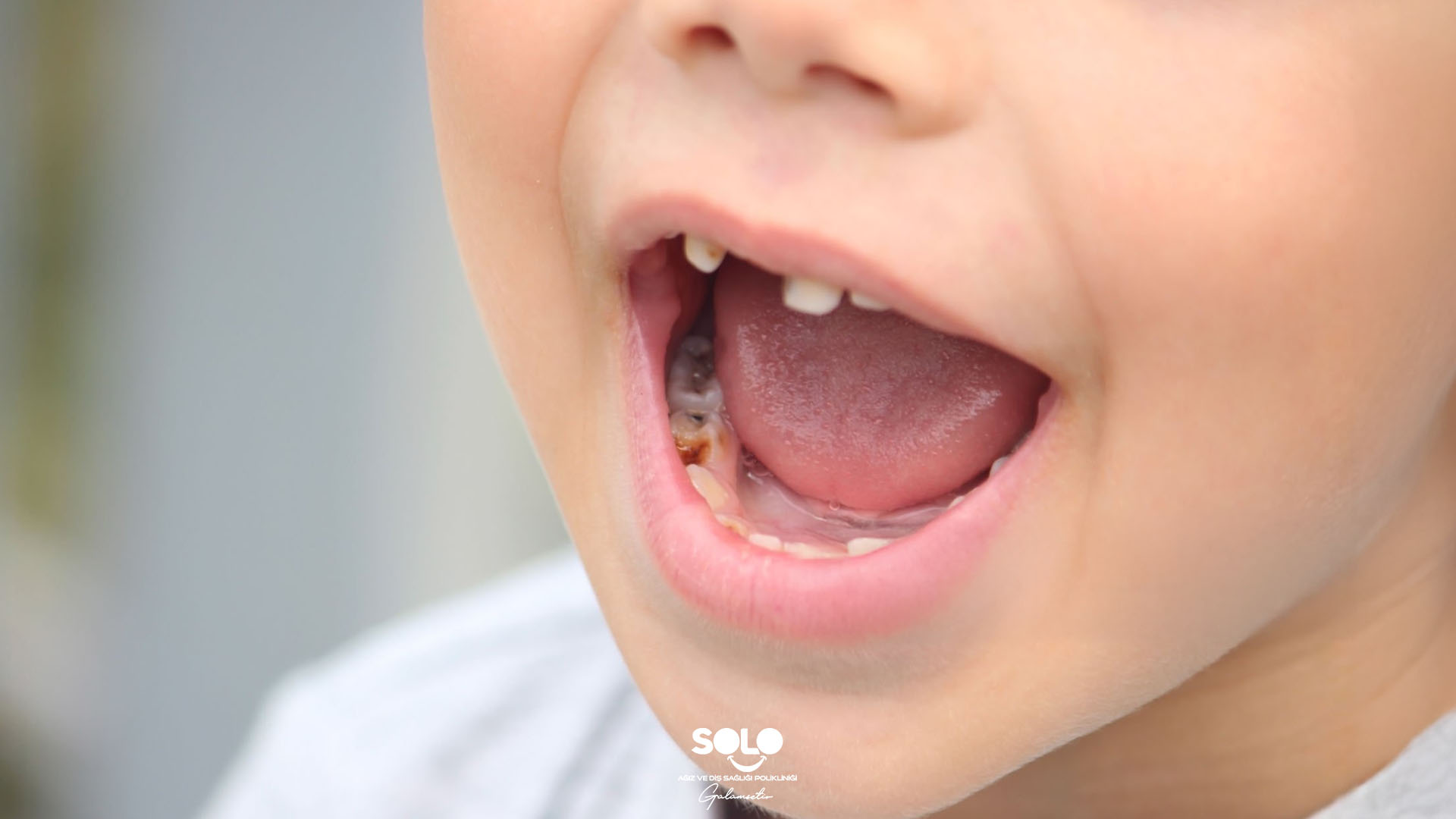
Many parents are surprised when they notice the first cavity in their child’s mouth. “How can a cavity form at such a young age?”, “The tooth just came in,” or “It will be replaced anyway” are common reactions. These thoughts are completely understandable. However, the reality is that tooth decay in baby teeth is one of the most common health problems in childhood and often progresses without being noticed. If a child doesn’t complain of pain, the situation may not seem urgent, but the decay can continue to grow silently.
Moreover, cavities in baby teeth don’t only affect that single tooth. When left untreated, they can lead to pain, infection, chewing difficulties, and even changes in a child’s eating habits. Some children avoid eating because of discomfort, while others wake up at night due to tooth pain. This situation directly affects both the child’s overall well-being and the daily life of the family.
Why Are Baby Teeth So Important?
First, let’s clear up a very common misconception: yes, baby teeth are temporary, but they are definitely not unimportant. In fact, they form one of the most critical foundations of a child’s oral and dental health. These small teeth take on a much bigger role than we might expect in a child’s everyday life.
Thanks to baby teeth, children can chew their food properly, which is the first step toward healthy digestion. They also play an active role in learning to speak. The correct pronunciation of certain sounds is directly related to the position of the teeth in the mouth. Losing baby teeth too early can even negatively affect speech development.
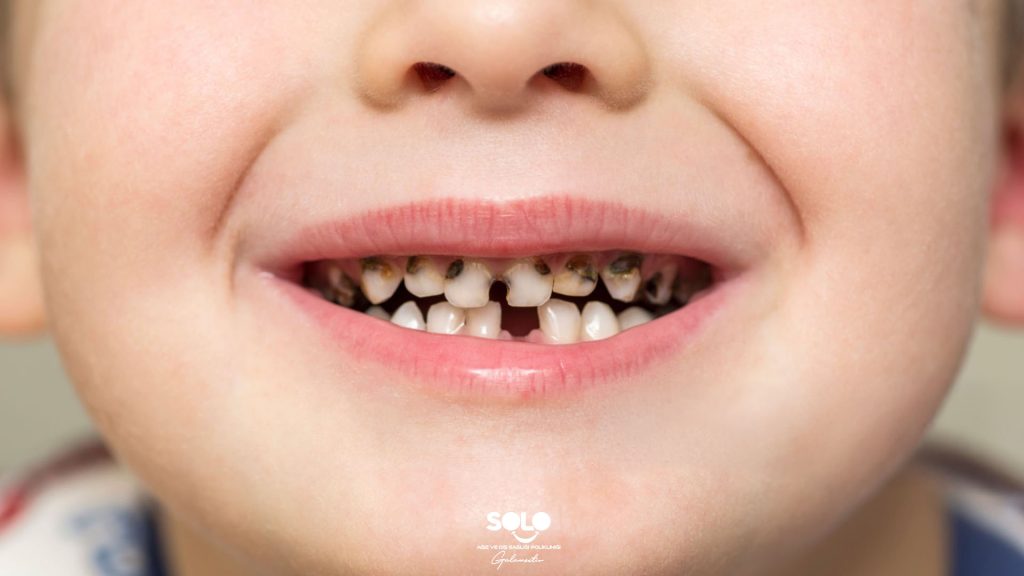
Perhaps their most overlooked yet most vital role is guiding permanent teeth. Baby teeth act like natural placeholders for the adult teeth developing underneath. If a baby tooth is lost early due to decay, neighboring teeth may shift into that empty space. Over time, this can lead to crowding, misalignment, and the need for long and challenging orthodontic treatments.
What Is Baby Tooth Decay?
Baby tooth decay is a process of damage caused by bacteria in the mouth feeding on food residue left on the teeth. These bacteria produce acids that gradually wear away the outer enamel layer and then the softer structure beneath it. In children, this process progresses much faster than in adults because baby teeth are more delicate and vulnerable.
That’s why parents sometimes say, “We just noticed it,” while a small color change has already turned into a deep cavity. What starts as a slight white spot or a faint brown mark can become severe enough to cause pain and infection within just a few months. Children may not always express discomfort, or they may get used to the pain and stay silent.
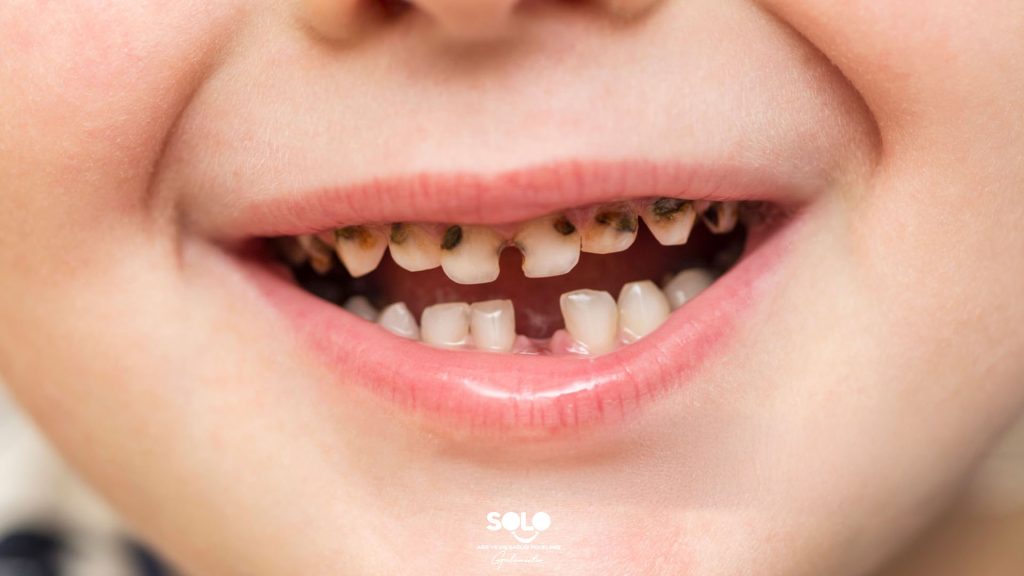
One of the most common and risky forms of baby tooth decay is known as “baby bottle tooth decay.” It is especially common in children who consume milk, formula, or sugary drinks from a bottle at night. Since the mouth is not cleaned during sleep, teeth remain exposed to acids for long periods, allowing decay to spread rapidly. This type of decay often affects multiple teeth at once and can lead to serious problems if not treated early.
Why Do Baby Teeth Get Cavities?
Baby tooth decay usually doesn’t result from a single mistake, but rather from small habits repeated over time. One of the main reasons is children’s love for sugary foods. Frequently consumed chocolate, cookies, packaged snacks, and fruit juices increase the amount of sugar in the mouth. Bacteria feed on this sugar and produce acid, which can quickly damage the sensitive structure of baby teeth. The issue is not only what children eat, but how often they eat it; constant exposure to acid throughout the day greatly increases the risk of cavities.
Another major factor is nighttime feeding and bottle use. During sleep, saliva production decreases, and saliva normally helps clean the mouth and neutralize acids. Milk, formula, or sugary drinks left in the mouth overnight create the perfect environment for bacteria. Children who fall asleep with a bottle often develop fast-spreading cavities on their front teeth. By the time these cavities are noticed, they are usually already advanced, making treatment more difficult for both the child and the parents.
In addition, inadequate oral care plays a significant role in cavity formation. If teeth are not cleaned as soon as they erupt, plaque builds up quickly. Children brushing their teeth on their own is usually not enough; parental supervision is essential, especially until early school age. Some children may also have a genetically weaker enamel structure, which increases their susceptibility to decay. However, even with genetic predisposition, most baby tooth cavities can be prevented with proper care and regular dental check-ups.
What Are the Symptoms of Baby Tooth Decay?
Baby tooth cavities do not always start with pain, which makes them difficult to detect early. The most common signs include:
- White or brown spots on the tooth surface
- Sensitivity to cold, hot, or sweet foods
- Discomfort while eating
- In advanced cases, toothache and swelling
If even one of these signs is noticed, it is important to see a dentist without delay.
What Happens If Baby Tooth Cavities Are Not Treated?
Untreated baby tooth cavities affect more than just the tooth itself. As decay progresses, infection can develop and may damage the jawbone or the developing permanent tooth underneath. A child in pain may have difficulty eating, experience sleep disturbances, and struggle at school.
In some cases, early extraction of the decayed tooth may be necessary, which can later lead to orthodontic problems.
How Can Baby Tooth Decay Be Prevented?
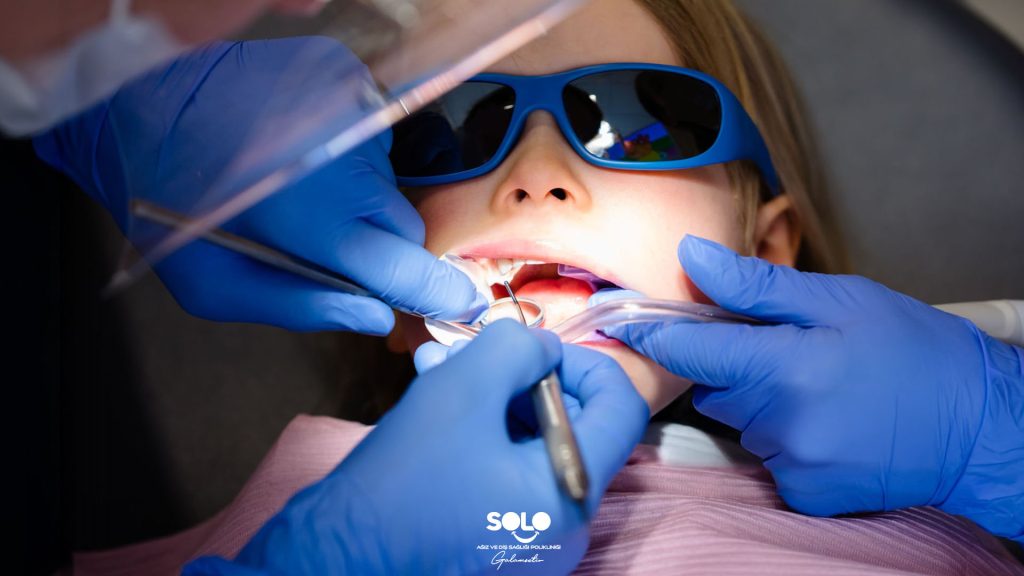
Preventing cavities in baby teeth is actually much easier than treating them. Small but consistent habits can prevent major problems in the future. The most important step is starting oral care as soon as the first tooth appears. Cleaning begins with a soft cloth, followed by an age-appropriate toothbrush and a small amount of toothpaste. This routine helps children see tooth brushing as a natural part of daily life.
Nutrition is just as important as brushing. Completely banning sugary foods is often unrealistic, but controlling their intake makes a big difference. Eating sweets at set times rather than constantly snacking, and cleaning the mouth afterward, significantly reduces cavity risk. Special attention should be paid to nighttime feeding. Giving milk or sugary drinks in a bottle before sleep keeps teeth exposed to acid for hours. Breaking this habit early is one of the strongest steps in preventing baby tooth decay.

