
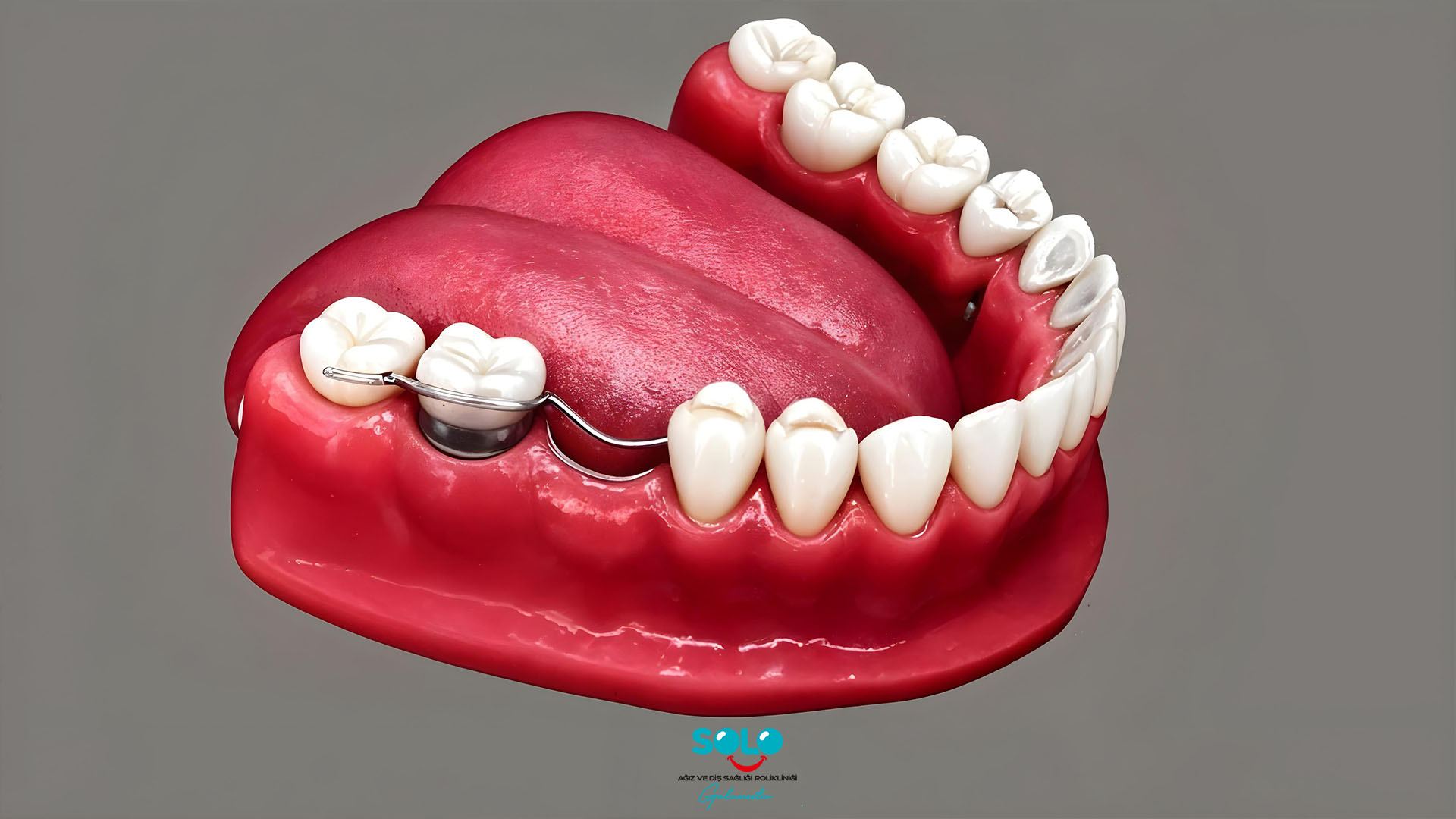
What is a Placeholder?
Milk teeth not only support feeding and speech functions, but also serve as a guide for permanent teeth to emerge in the correct position. However, in some cases, milk teeth may be lost earlier than expected. These early losses can lead to tooth alignment disorders and orthodontic problems in later years. This is where placeholders come into play. Space maintainers are appliances that preserve the place of prematurely lost milk teeth and help permanent teeth emerge in a healthy and correct position.
The Importance of Using Placeholders
Space maintainers are special appliances that replace milk teeth lost at an early age and allow permanent teeth to emerge in the correct position. Keeping milk teeth healthy during childhood is of great importance for the regular tooth structure in later ages. However, in some cases, primary teeth may be lost earlier than expected due to caries, trauma or other factors. In such cases, the use of space maintainers both supports tooth development and prevents problems such as tooth crowding that may occur in the future. Here are the main advantages that placeholders offer:
Prevents Orthodontic Problems
Milk teeth serve as a natural guide for the permanent teeth coming from underneath. If no precautions are taken to replace a prematurely lost milk tooth, adjacent teeth may slide into the gap, causing deterioration in tooth alignment. These shifts create crookedness and irregularity over time and may cause imbalances in the jaw structure. As a result, the likelihood of needing orthodontic treatment (for example, braces) increases as the child grows. However, space maintainers prevent these tooth shifts and help to have a more effortless and healthy orthodontic process in later ages.
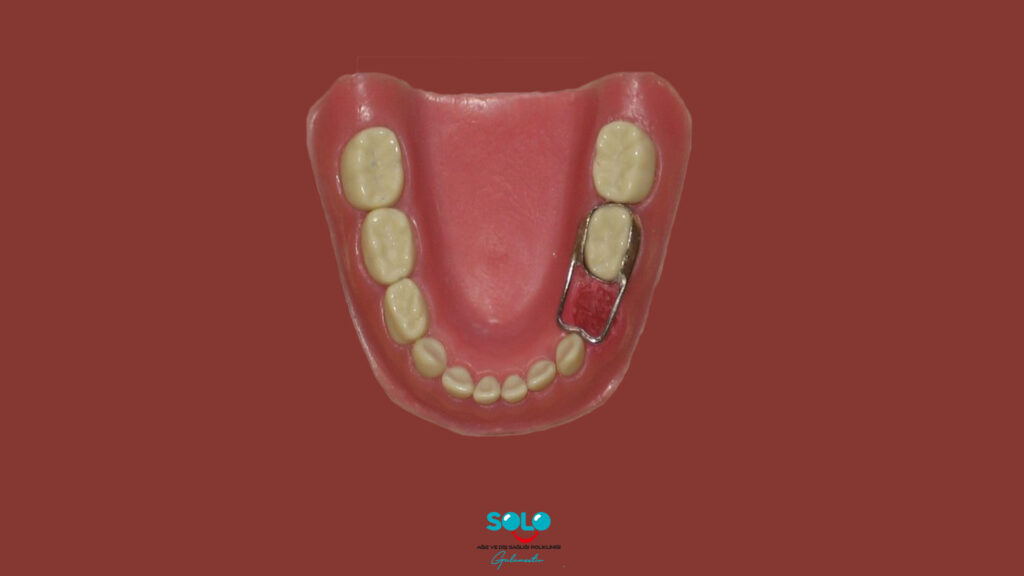
Ensures Permanent Teeth Come Out in the Right Place
In order for permanent teeth to emerge in a healthy and orderly manner, milk teeth must remain in the mouth for a certain period of time. However, in case of early tooth loss, this natural process may be interrupted. Space maintainers protect the space where the missing tooth is located and ensure that the new tooth is placed in the correct position. In this way, teeth do not erupt irregularly and the jaw structure can continue to develop without deterioration.
Protects Speech and Chewing Functions
Primary teeth are important not only in terms of aesthetics or tooth alignment, but also in terms of basic functions. Especially early loss of back teeth can cause serious problems in chewing functions. Children cannot chew food properly and their digestive system may be negatively affected. On the other hand, tooth loss occurring in the front area may negatively affect speech development. In order for some letters to be pronounced correctly, the teeth must be in a certain arrangement. Space maintainers support the child’s chewing and speaking functions by preventing the negativities caused by these losses.
Protects Aesthetic Appearance and Supports Self-Confidence
Missing front teeth, in particular, can cause both psychological and social problems in children. Children may avoid laughing or have difficulty communicating with their peers due to missing teeth. This can cause lack of self-confidence and social adaptation problems. These appliances help the child grow up both healthy and self-confident by preserving facial aesthetics.
Placeholder Types
There are two types of placeholders.
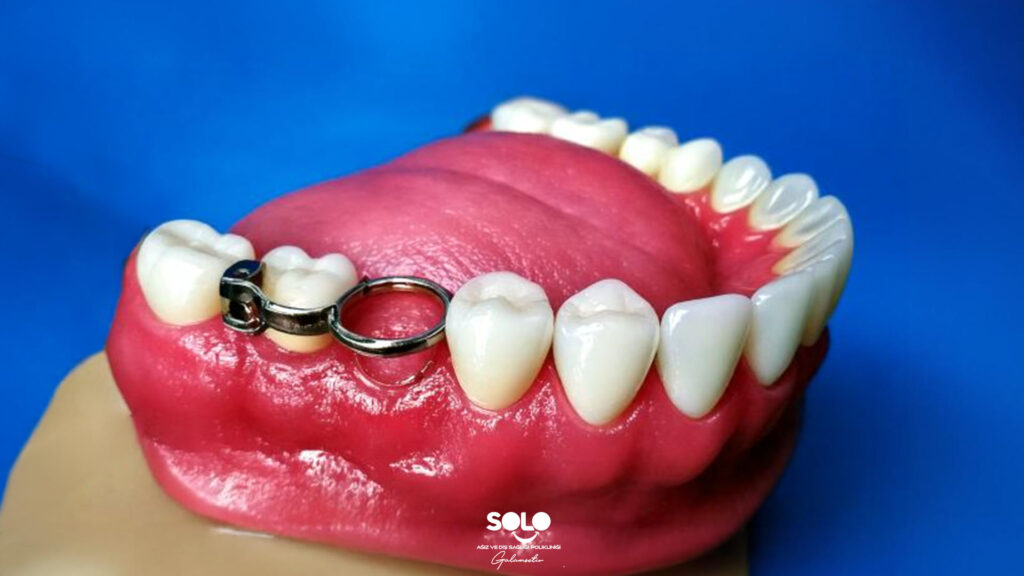
Fixed Placeholders
Fixed appliances are fitted by the dentist and cannot be removed by the patient. It is generally preferred when there is a single tooth loss.
- Band and Ring Appliance: It consists of a metal ring that is fixed to a tooth with a band and protects the space of the missing tooth.
- Lingual Arch: It is a wire system that is connected to the molars in the lower jaw and passes through the inner surface of the teeth.
- Transpalatal Arch: It is a fixed appliance used in the upper jaw. It prevents the gap from closing through a wire placed on the inner surface of the teeth.
Animated Placeholders
Removable appliances can be removed and installed by the patient. It is generally used in cases where more than one tooth is missing.
- Acrylic Plate Appliance: These are removable appliances made of transparent or colored acrylic. It provides ease of use for children.
- Dental Prosthesis Appliances: They are used by temporarily replacing the missing tooth with a prosthesis-like tooth.
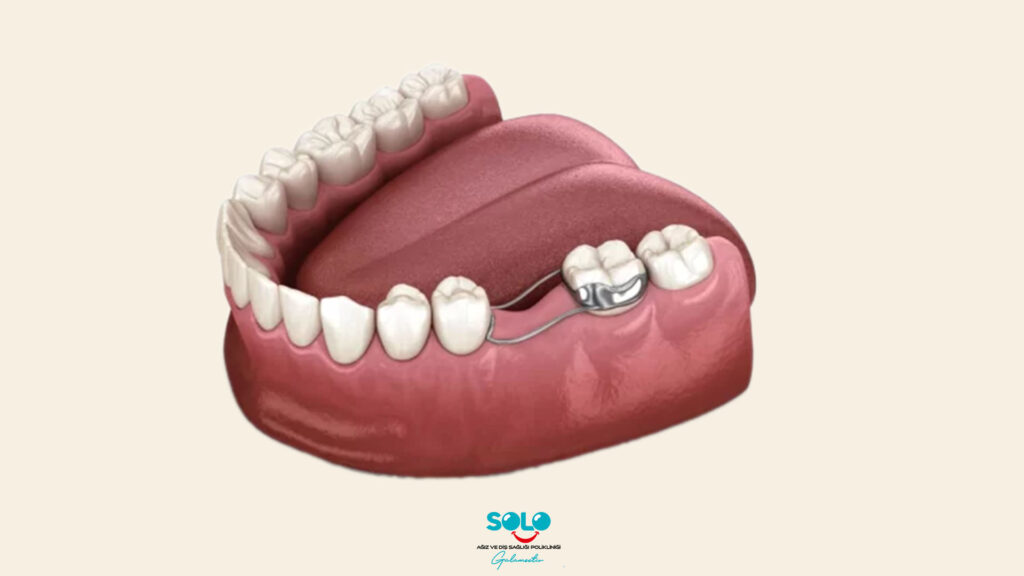
Regular maintenance and dentist checks are of great importance for these appliances to be effective and long-lasting. There are some important points that need to be taken into consideration so that the child can protect his or her oral health and the space maintainer can fully perform its function. The dentist should be visited regularly to evaluate whether the space maintainer is suitable for the mouth structure, and possible incompatibilities or irritations should be detected early.
In addition, oral hygiene should be taken care of, teeth should be brushed at least twice a day, dental floss should be used and hygiene should be supported with mouthwash. If removable appliances are used, they should be stored in a hygienic storage box when removed and cleaned before each use. Additionally, hard foods (e.g. nuts, hard candies) should be avoided as such foods may cause breakage or damage to this device. Sticky foods (gum, caramel candies) should not be consumed as they may stick around the appliance and cause hygiene problems.

